Kings Road, Tyseley, Birmingham, West Midlands
Mon-Fri 08:00 AM - 05:00 PM
Is it dangerous to plug too many things into one outlet?
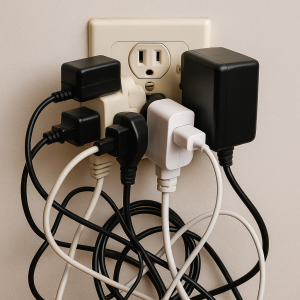
Yes, plugging too many devices into one outlet can be very dangerous. It’s a common sight in homes and offices: power strips filled to capacity, with cords snaking across the floor. While it may seem convenient, overloading a single outlet poses real safety hazards that shouldn’t be ignored.
Every electrical outlet is designed to handle a certain amount of power—typically 5 to 20 amps in most homes. When you exceed that capacity by plugging in too many devices, particularly high-wattage ones like space heaters, microwaves, or hair dryers, you force the wiring behind the walls to carry more current than it was built for. This can cause the wires to overheat, potentially melting the insulation and sparking a fire.
According to the Fire Protection Association (FPA), electrical failures or malfunctions are a leading cause of home fires, and overloaded outlets or power strips are a major contributor. Many people assume using a power strip or surge protector ( SPD ) makes it safe to plug in multiple devices, but these don’t increase the capacity of the wall outlet. In fact, using cheap or poorly made power strips only increases the risk.
One of the tell tale signs of overloading is a warm or hot outlet, discoloured wall plate, flickering lights, or a burning smell. If you notice any of these, it’s important to unplug devices immediately and call an electrician to assess the situation. Ignoring these warning signs can lead to irreversible damage or even a full-blown electrical fire.
Even if a fire doesn’t occur, overloading circuits can trip breakers or blow fuses repeatedly. While this may seem like a minor nuisance, it’s a clear signal that your electrical system is under strain. In older homes especially, where wiring may not be up to modern standards, plugging in too many devices can be even riskier.
So, how can you stay safe?
First, avoid daisy-chaining power strips or extension cords together. Never plug a power strip into another power strip. Spread out your electrical devices across multiple outlets and, when possible, use outlets on different circuits. If you consistently need more power than your current setup allows, it’s worth investing in an electrical upgrade or having additional outlets installed by a licensed electrician.
Smart power management is also essential. Be mindful of the wattage of the devices you’re using and unplug items when they’re not in use. Not only does this reduce your risk of overload, but it also conserves energy and reduces your electricity bill.
In conclusion, while it might be tempting to plug everything into a single outlet for convenience, it’s not worth the risk. Electrical overload is a hidden danger that can have devastating consequences. Practicing safe outlet use, recognizing the warning signs of trouble, and consulting with professionals when needed are simple but vital steps to protect your home and loved ones.
If in doubt and need to call a professional, here at Yes Electrical we are always only a call away.
